What a patient survey comment can add to a score
See how a fictional patient comment can point to a specific problem alongside a survey score.
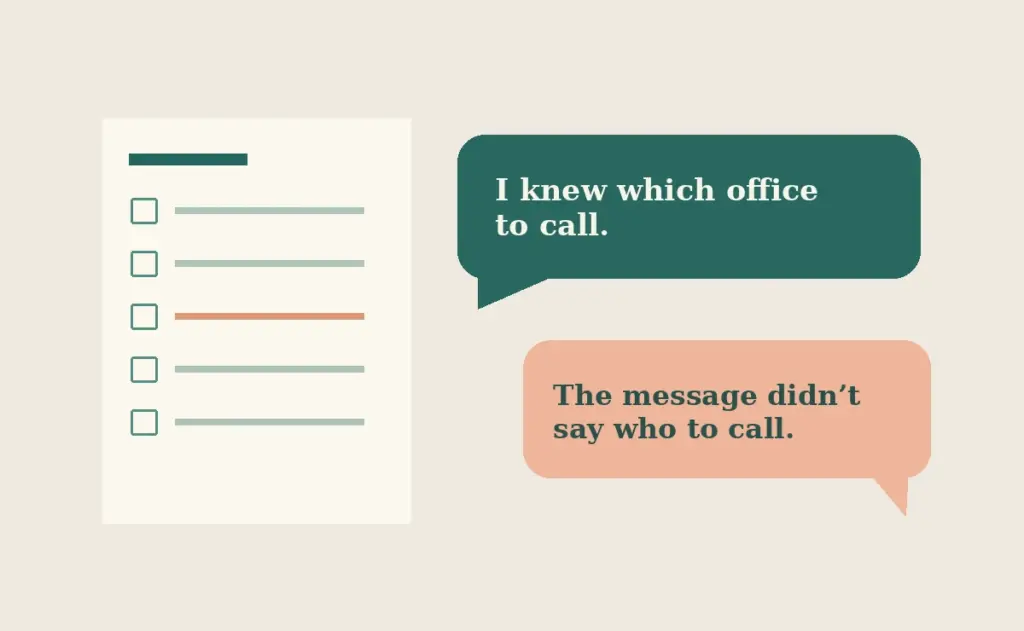
Two patients both choose “Usually” on a fictional clinic survey about staff giving clear instructions. One writes, “I knew which office to call because the receptionist circled the number.” The other says, “The portal message told me to book, but it didn’t say who to call.” The mark looks the same on the report. The comments point to two different paths through the same follow-up.
Read a comment for the step it describes
AHRQ’s CAHPS Clinician & Group Narrative Item Set uses a sequence of open-ended questions. The questions ask what matters to patients, invite an account of what went well, and ask what could have gone differently. Use the agency’s questionnaire and instructions for the version being administered. The order of the published questions gives each account a starting point before asking for examples. The two invented comments above illustrate what this kind of detail can add. They are separate from the official questions.
For a team reviewing those fictional comments, “patients are confused” would be too broad a summary. A more precise note is “one response describes a follow-up message without a named booking contact.” That gives the team a place to look. They could review the message template and check whether the department and callback number appear together. The first comment offers a second clue: the person found a written number helpful when it was explicitly pointed out.
Check the group before reporting a pattern
Imagine that the second response is one of 12 written comments, from 80 completed surveys. One comment is enough to raise a question about the template. Counting it as one out of 12 describes the reviewed comment set, and counting it as one out of 80 describes how many of those survey returns mentioned the issue. Neither denominator estimates how many patients actually received an unclear message. Some respondents skipped the comment box and others used it for different experiences.
If you share a finding, keep the survey period, the number of survey returns, and the number of comments you reviewed with it. Before circulating a quotation, consider whether a name, date or unusual combination of details could identify someone. Follow the survey’s confidentiality rules when deciding what wording can be shared. A careful next step could be to inspect the booking message and check whether the same missing contact appears on any other instructions.